Free template
Junk removal invoice template
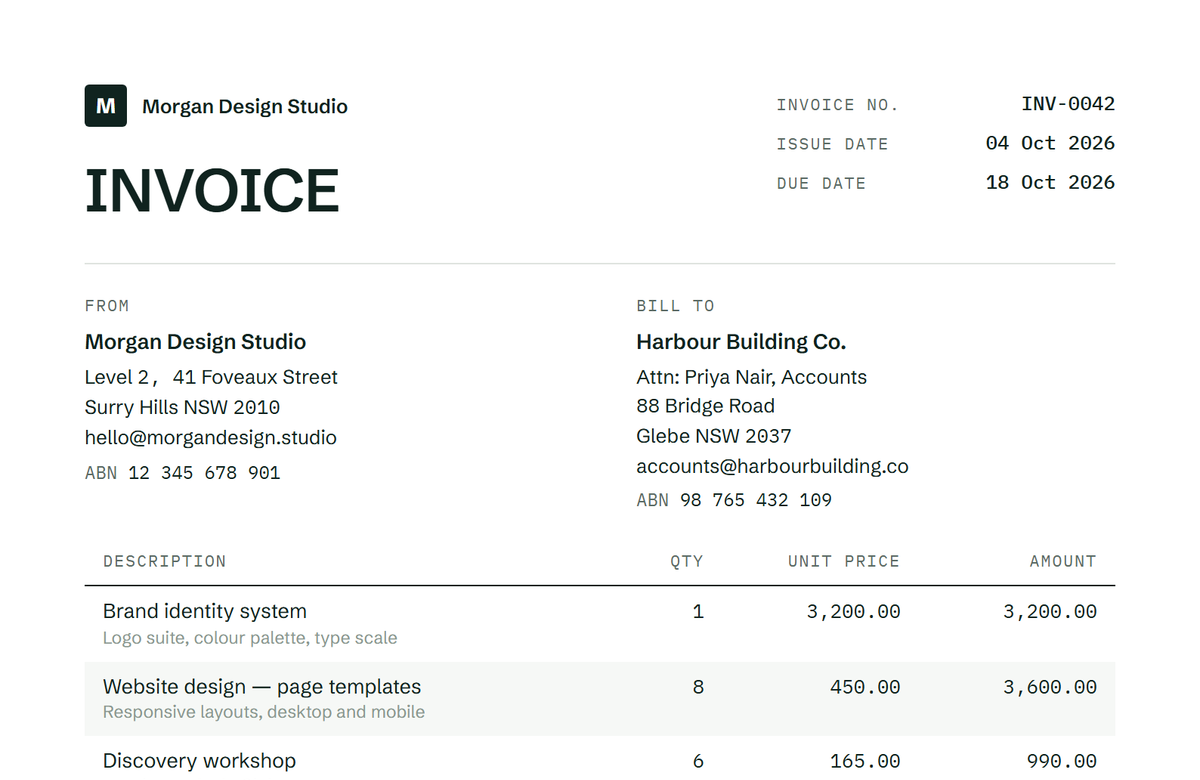
A junk removal invoice should tell the customer what was picked up, where and when it happened, and how the price was calculated. Show the load or volume basis, labor, travel, tipping, and disposal charges only when those items are supported by the agreement or work record.
Preview unavailable. Download a template to view the document.
What goes on it
Junk Removal Invoice fields
| Field | What to write | Example |
|---|---|---|
| Pickup address and date | Connect the invoice to the completed pickup. | — |
| Load, volume, or flat-rate basis | State the measurement or scope used for pricing. | — |
| Labor, travel, tipping, and disposal | Separate agreed service and pass-through charges. | — |
| Credits and amount due | Show deposits, credits, and remaining balance clearly. | — |
What a junk removal invoice invoice should explain
A junk removal invoice should tell the customer what was picked up, where and when it happened, and how the price was calculated. Show the load or volume basis, labor, travel, tipping, and disposal charges only when those items are supported by the agreement or work record.
The invoice is the billing record for the agreed work. It should let the customer match the charge to the pickup address and date and to the scope, rate, or milestone that was actually approved.
- A flat-rate residential pickup. Keep the related work, dates, quantities, and agreed amount on a line the customer can check.
- A volume-based commercial removal. Keep the related work, dates, quantities, and agreed amount on a line the customer can check.
- A disposal or tipping charge passed through under the agreement. Keep the related work, dates, quantities, and agreed amount on a line the customer can check.
Fields that keep the job recognizable
Use the fields that identify this job without inventing facts. If a value is not in the agreement or work record, leave it editable and confirm it before sending.
| Field | Why it belongs |
|---|---|
| Pickup address and date | Connect the invoice to the completed pickup. |
| Load, volume, or flat-rate basis | State the measurement or scope used for pricing. |
| Labor, travel, tipping, and disposal | Separate agreed service and pass-through charges. |
| Credits and amount due | Show deposits, credits, and remaining balance clearly. |
Billing situations junk removal invoice providers actually meet
Choose the line structure that matches the agreement. A fixed charge, hourly record, milestone, deposit, or pass-through cost should be recognizable as its own basis rather than hidden in a single total.
For a junk removal invoice job, the useful question is not only “what is the total?” but “which completed work or approved charge does this line represent?”
- Pickup location and load description. Show the period, quantity, rate, or reference that lets the customer reconcile it.
- Volume, weight, or flat scope. Show the period, quantity, rate, or reference that lets the customer reconcile it.
- Labor, stairs, and travel. Show the period, quantity, rate, or reference that lets the customer reconcile it.
- Tipping, disposal, credit, and balance. Show the period, quantity, rate, or reference that lets the customer reconcile it.
Make the total easy to reconcile
Keep subtotal, applicable tax, deposits or credits, previous payments, and amount due separate. Enter tax only when it applies to your transaction; this page does not determine tax treatment.
If the customer paid a deposit or an earlier milestone, show it as a separate credit or deduction. Do not silently reduce a work line and make the arithmetic impossible to audit.
- Use a sequential invoice number and issue date.
- State the billing period, milestone, or service date covered by this invoice.
- Copy payment terms and instructions from the agreement instead of promising a legal deadline.
Before you send the invoice
Review every editable field against the job record. A clean invoice is useful when it is specific, not when it is crowded with claims the contract does not support.
The generator can help you assemble the document. It does not provide dispatch, customer management, tax filing, licensing, disposal, warranty, or legal-compliance services.
- Confirm the pickup record and address. Confirm this detail from the agreement or work record before sending.
- Use the agreed load or volume basis. Confirm this detail from the agreement or work record before sending.
- Check disposal requirements separately instead of implying compliance. Confirm this detail from the agreement or work record before sending.
Frequently asked questions
What should a junk removal invoice include?
Identify the pickup address and date, describe the material or load basis, list labor, travel, tipping or disposal charges when agreed, amount due, and payment terms.
Should disposal fees be separate?
Yes, when the agreement passes through tipping or disposal costs. Show them as their own line so the customer can reconcile the charge.
Should weight or volume be shown?
Show the measurement used by the agreement. If the job is flat-rate, describe the agreed load or scope rather than inventing a weight.
Are there any free tools to generate junk removal invoices?
Yes. The free invoice generator lets you enter the customer, pickup reference, invoice dates and agreed charges, review the document and download a PDF without an Invosmith account or watermark. Describe the completed pickup and the pricing basis from the job record: a flat scope, a measured load or another agreed basis. Separate labor, travel and tipping or disposal charges when they were separately agreed. Enter any amount already paid and review the balance before downloading. Keep supporting pickup and disposal records with your own job file. The generator creates the invoice from your entries; it does not schedule collections or certify disposal.
Does this page provide disposal compliance advice?
No. Record the disposal facts and fields required for the job.