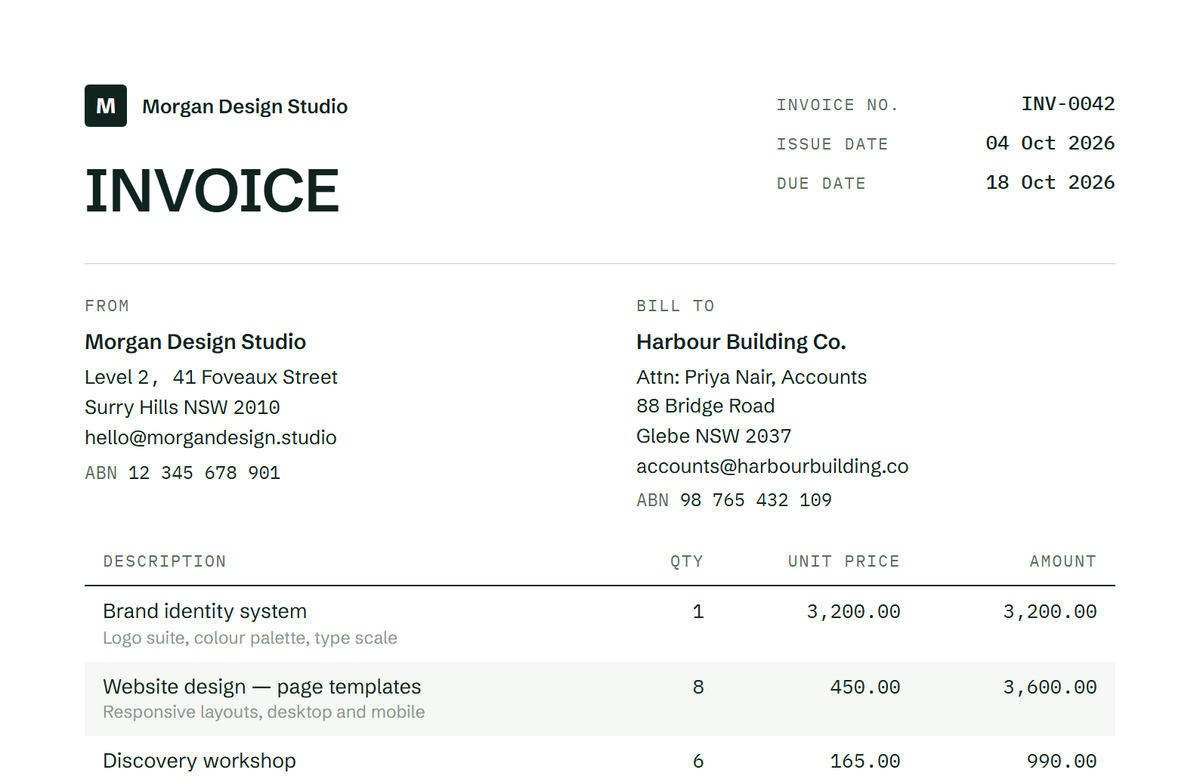
DJ Invoice Template (PDF / Word)Event date, venue, performance and equipment lines.
Open this template in the invoice makerFree template
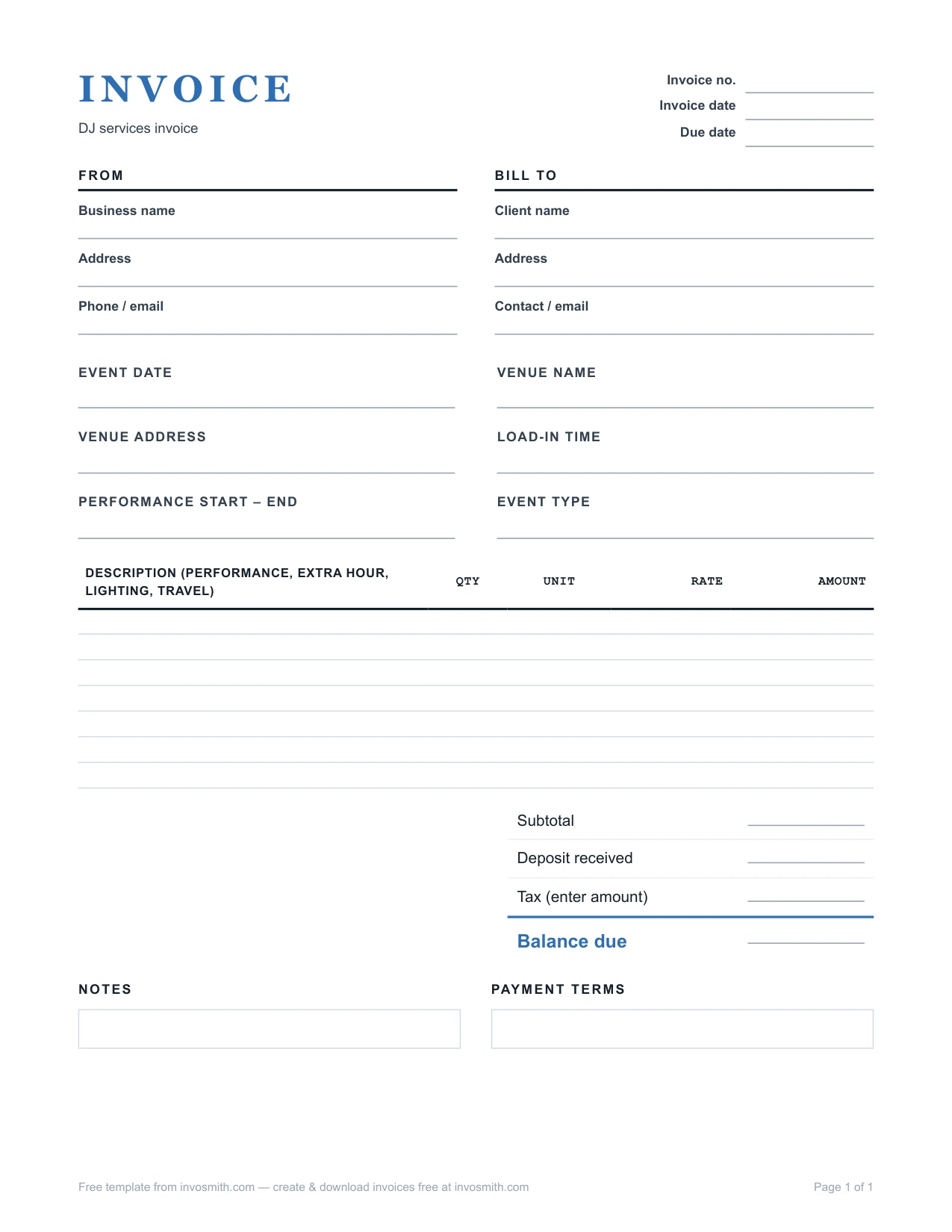
A DJ invoice can identify the event date and venue, the booked hours, and the agreed package or hourly basis. Show any deposit received, remaining balance, due date, or overtime charge according to the booking terms. This free DJ invoice template provides space for those details. Download it as PDF or Word below. No sign-up, no watermark.
Every download is free - no email, no sign-up, no watermark.
The header is standard — your business name, the client, an invoice number, the invoice date. Then the event takes over:
Illustrative invoice DJ-104, issued August 15 to the couple for the September 12 event at Maple Grove Barn. Amounts are in USD; tax is excluded from this example. The August 29 due date is an example of a pre-event schedule only because these sample booking terms specify it; it is not a general recommendation. The overtime rate is also a sample term.
The deposit is restated with its receipt date, so the client can compare it with their payment record. The remaining balance follows the due date in the sample booking terms. Overtime is shown separately as a pre-agreed rate, with no amount added because no extra hour has been requested and performed.
| Description | Qty | Rate | Amount |
|---|---|---|---|
| Wedding reception package — 6 hrs, Maple Grove Barn, Sept 12, 4–10 PM | 1 | 1,400.00 | 1,400.00 |
| Ceremony sound — system, mics, processional/recessional audio | 1 | 250.00 | 250.00 |
| Uplighting — 12 fixtures, color-matched | 1 | 300.00 | 300.00 |
| Subtotal | 1,950.00 | ||
| Deposit received — February 14 | −500.00 | ||
| Tax (if applicable) | — | ||
| Balance due under sample terms — on or before August 29 (14 days before event) | 1,450.00 | ||
| _Overtime: additional hour beyond 10 PM — $150/hr, only if requested, performed, and covered by the booking terms_ |
"Can you play one more hour?" If the booking terms cover overtime, confirm the request and apply the agreed rate only if the extra time is performed. A follow-up invoice can reference the original booking and additional time billed under those terms. If overtime was not agreed, confirm any change with the client rather than assuming a rate.
The deposit and balance are hard to reconcile. If a deposit was paid earlier, the final invoice can restate its amount and receipt date so the client can compare it with their records. Follow the booking terms for any deposit invoice and balance request.
The balance date is unclear. Print the due date from the booking terms as a calendar date. The invoice should restate the agreed schedule, not introduce a new one.
The timeline moved. If a schedule change affects booked hours or price, confirm the revised arrangement with the client and update the invoice to match it. Keep the event date, venue, and hours visible so the change is easy to identify.
The venue wants proof, the planner wants a copy. Keep the invoice addressed to the party that booked the work and owes payment under the arrangement. Send copies to other contacts when appropriate, while keeping the bill-to party clear.
An add-on changed after booking. Keep the original package line intact and add or revise the affected add-on line with a clear description. This makes the change visible without turning the whole event into one unexplained total.
Name the service, event date and revised amount so the payer can trace the change to the booking.
The event finished later than scheduled. Record the scheduled end time and the actual finish time as separate details. This keeps the event timeline visible beside the billed hours and prevents an unlabeled quantity from being mistaken for the original package length.
The client paid in stages. List each payment applied to the invoice with its receipt date, then show the remaining balance. Do not combine several payments into an unlabeled deduction, because the client loses the path from each payment to the final amount due.
Use the schedule agreed with the client and show its due date as a calendar date. There is no one timing that fits every booking; the invoice should document the arrangement already made.
If overtime is part of the booking terms, state the rate in advance and bill only for time requested and performed under those terms. If it was not agreed, confirm any change with the client before billing it.
If a deposit was taken, show the amount and date received and how it is applied to the balance, consistent with the booking terms. This lets the client compare the invoice with their payment record.
An invoice can record the amount requested, the event reference, any payment already received, and the due date. If a separate booking document sets other terms, make the invoice consistent with it rather than using the invoice to create or interpret those terms.
Show the amount and date actually received, and identify the booking it relates to. The invoice is a record of the payment arrangement you made with the client, not a guide to setting a deposit amount.